This post contains affiliate links. Please see our disclosure policy.
If you’ve ever swung your legs out of bed and felt your lower back say “not so fast,” you are not alone. Morning back stiffness is one of the most common things I hear about from women in my classes, and it tends to show up more as we age.
The good news? A few minutes of gentle stretching before your coffee can make a real difference in how your back feels for the rest of the day.
Why Does My Lower Back Hurt in the Morning?
After hours of lying still, your joints haven’t been moving, and that matters. The small facet joints in your lower back are synovial joints, just like your knees and hips, and they rely on synovial fluid to stay lubricated. Movement is what keeps that fluid circulating. After a night of lying still, things feel stiff and creaky until you get moving. Motion is lotion, ladies!
Then life piles on. A sleep position that twists your back, a mattress that’s past its prime, tight hips from sitting at a desk all day, or a core that isn’t firing the way it used to can all turn a little stiffness into real discomfort.
Midlife adds its own layer. We lose muscle more easily as we age, especially through perimenopause and menopause, and less muscle means less support for your spine. (Hello, creaky mornings.) That’s one more reason I’m such a believer in strength training at every age.
Does Stretching Help Morning Lower Back Pain?
Yes! Gentle movement first thing in the morning is one of the easiest ways to get your back moving again. Stretching warms up tight muscles, gets blood flowing, and loosens your hips and hamstrings so your lower back isn’t doing all the work.
Movement is also backed by the experts. The American College of Physicians recommends non-drug approaches like exercise, yoga, and tai chi as a first step for chronic low back pain.
One tip for mornings: keep it gentle. Your back is usually at its stiffest in that first hour, so move slowly, breathe, and skip any bouncing or forcing. You should feel a stretch, never sharp pain.
I say it all the time: cardio is to live longer, strength training is to live stronger, and mobility training is to live pain-free. This routine is your mobility.
As a certified personal trainer and health coach for nearly 40 years, you’d think I’d be immune to this stuff. Nope! About 10 years ago, I had my own bout of lower back pain, and it was my aha moment.
I’d reached the age where I couldn’t just jump into my day (or my workout) cold anymore. I needed to warm up, and I needed to make mobility a daily habit.
The best part? This whole routine takes just 7 minutes of your day. Easy peasy.
Best Stretches for Lower Back Pain Relief
Here’s the routine. It targets your lower back, hips, and hamstrings, the areas that most often contribute to morning stiffness.
Stretch Routine Directions: Hold each stretch for 20 to 30 seconds (or do the moving stretches for 8 to 10 slow reps) and repeat on both sides where it applies.
You can do the first three right in bed if getting down on the floor sounds like a lot before 7 a.m.
1. Knees to Chest Stretch
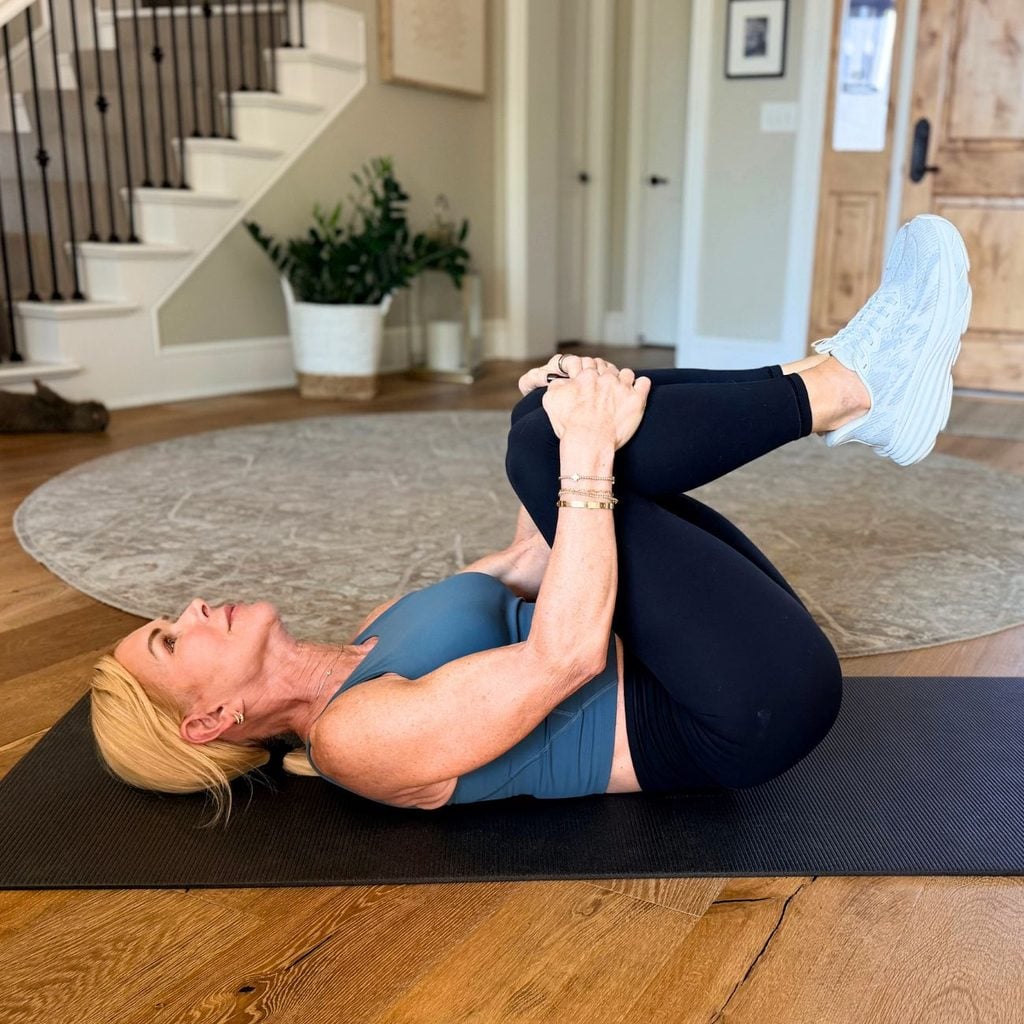
Lie on your back with your knees bent and feet flat. Draw one knee toward your chest, then the other, holding behind your thighs or on your shins. Keep your head and shoulders relaxed on the floor.
Hold and breathe, or gently rock side to side to massage your lower back.
2. Lumbar Rotation Stretch
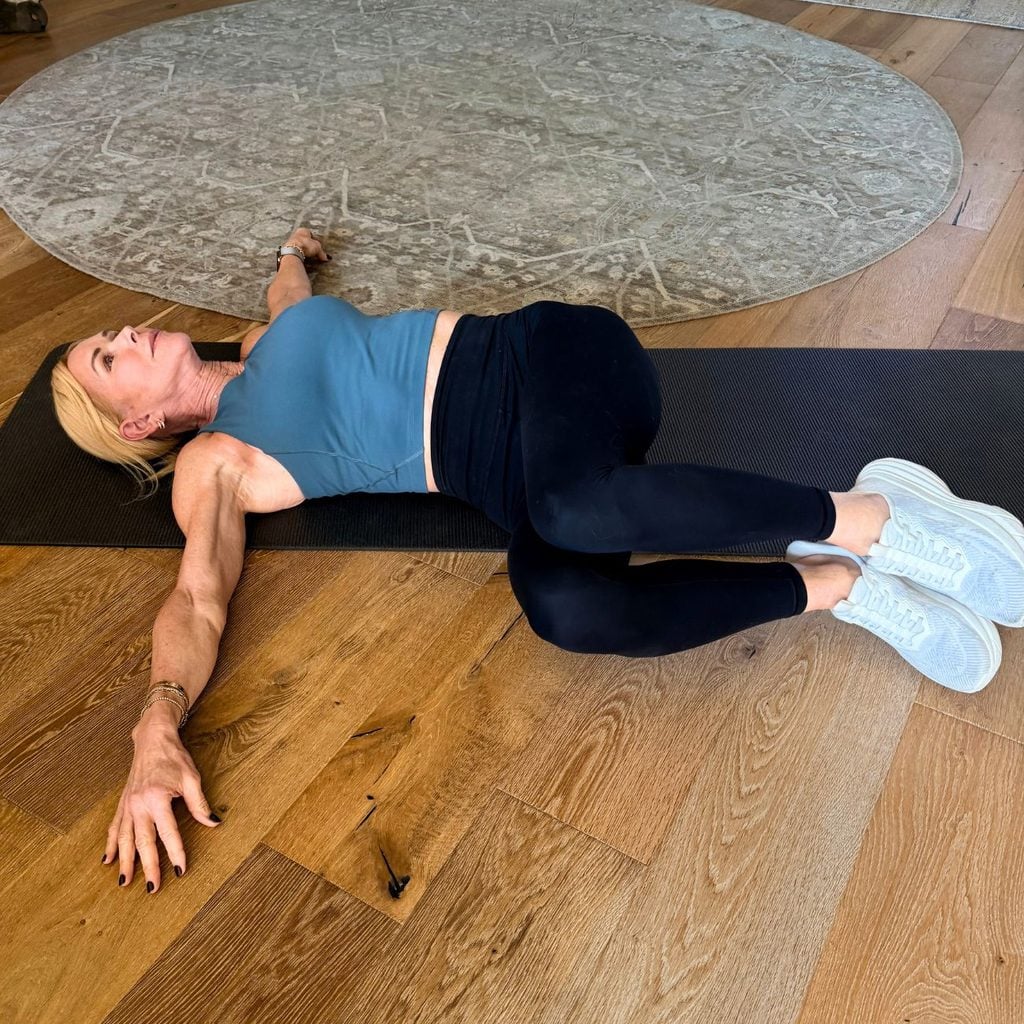
Lie on your back with your knees bent, feet flat, and arms out in a T. Slowly let both knees drop to one side while your shoulders stay grounded. Pause, bring your knees back through center, and lower them to the other side.
Only go as far as feels comfortable. Imagine it’s like a windshield wiper motion but slower.
3. Piriformis Stretch (Figure 4)
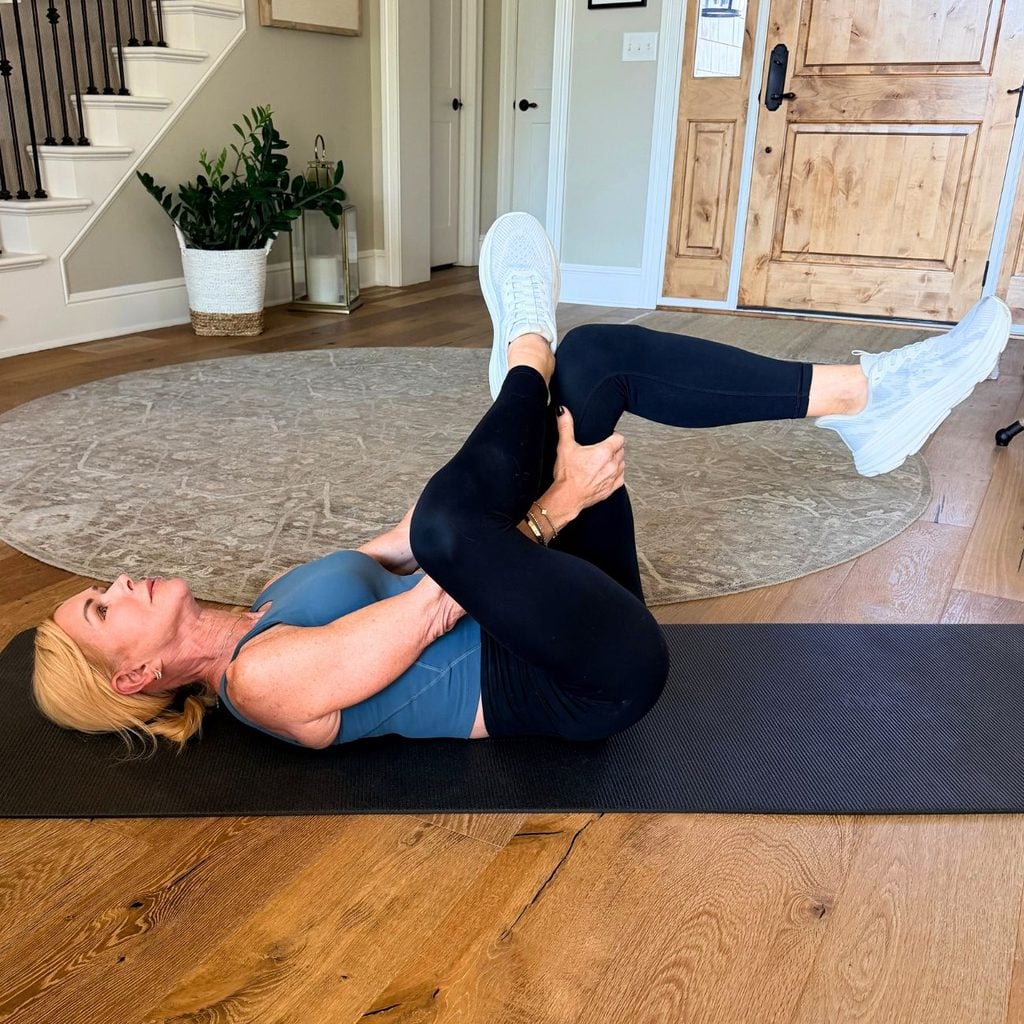
Lie on your back with your knees bent. Cross your right ankle over your left knee to make a figure 4, and keep your right foot flexed to protect the knee. Thread your hands behind your left thigh and gently pull it toward you until you feel a stretch deep in your right glute.
Hold, then switch sides.
4. Seated Hamstring Stretch
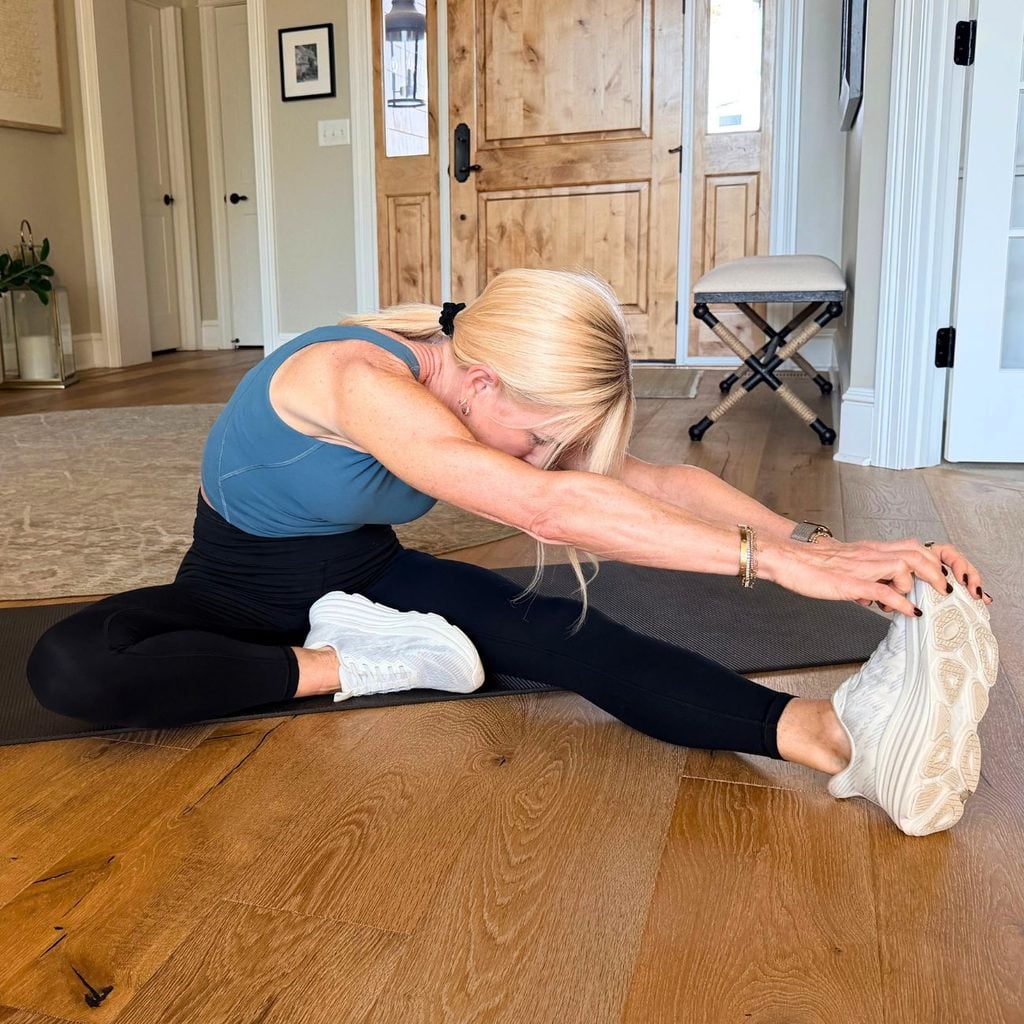
Sit tall on the floor (or the edge of your bed) with your right leg straight and your left knee bent. Keeping your spine long, hinge forward from your hips and reach toward your shin or ankle.
Think chest forward, not head down, so you don’t round your back. Hold, then switch legs.
5. Kneeling Hip Flexor Stretch (Runner’s Lunge)
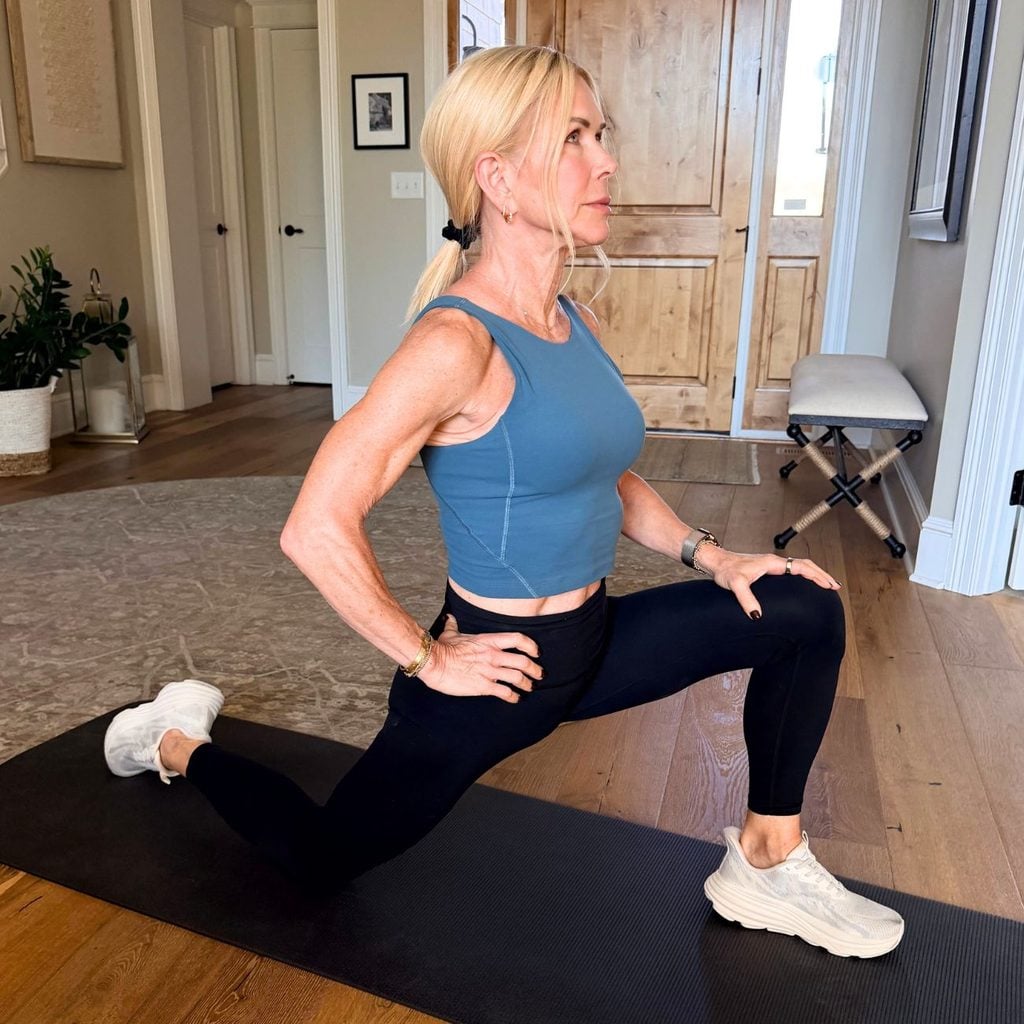
Kneel on your right knee with a pillow or folded towel underneath it, left foot planted in front with your knee over your ankle. Tuck your tailbone slightly and squeeze your right glute, then shift your hips forward until you feel a stretch in the front of your right hip.
Keep your chest tall, and hold a chair for balance if you need it. Switch sides.
6. Child’s Pose Stretch
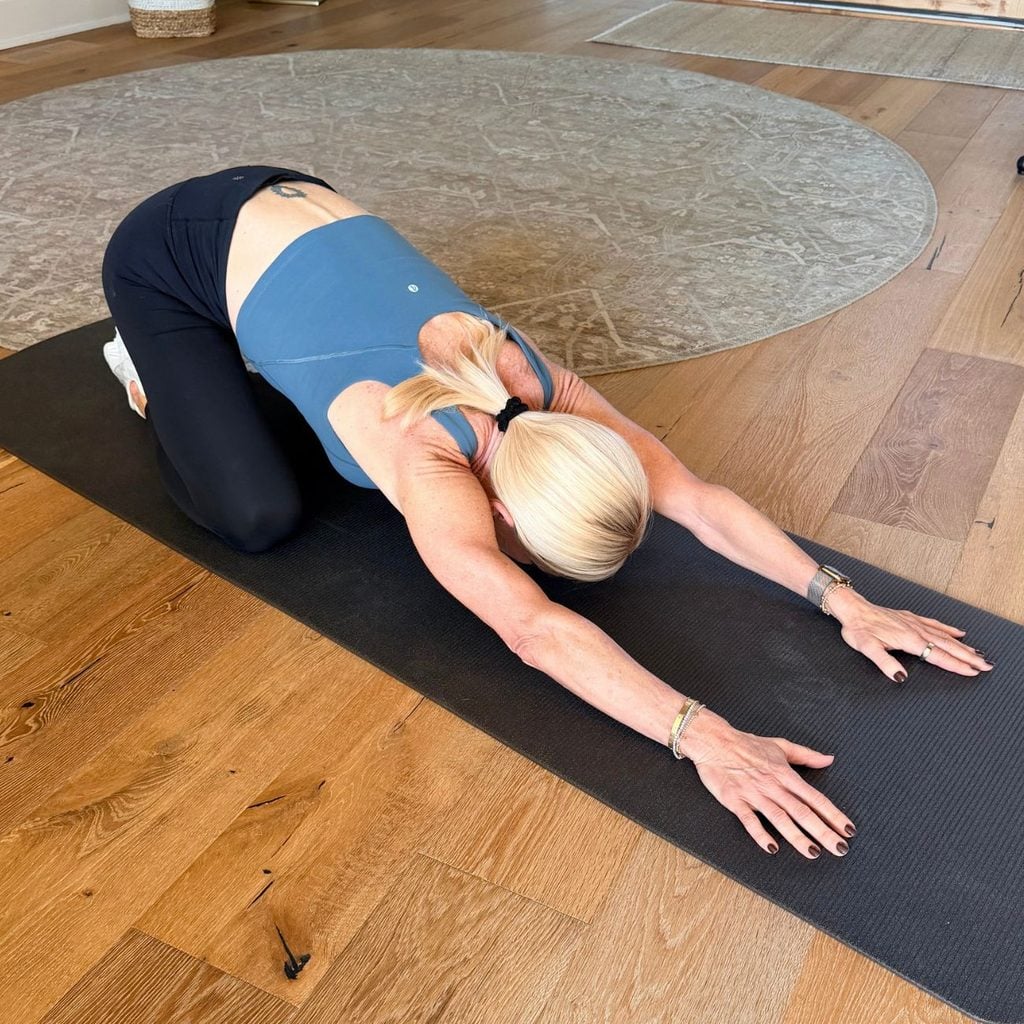
Kneel with your big toes touching and your knees together or wide. Sit your hips back toward your heels and walk your hands forward on the floor, resting your forehead down. Breathe deeply into your back.
A pillow under your hips or forehead makes this more comfortable if your knees or hips complain.
7. Cat Cow
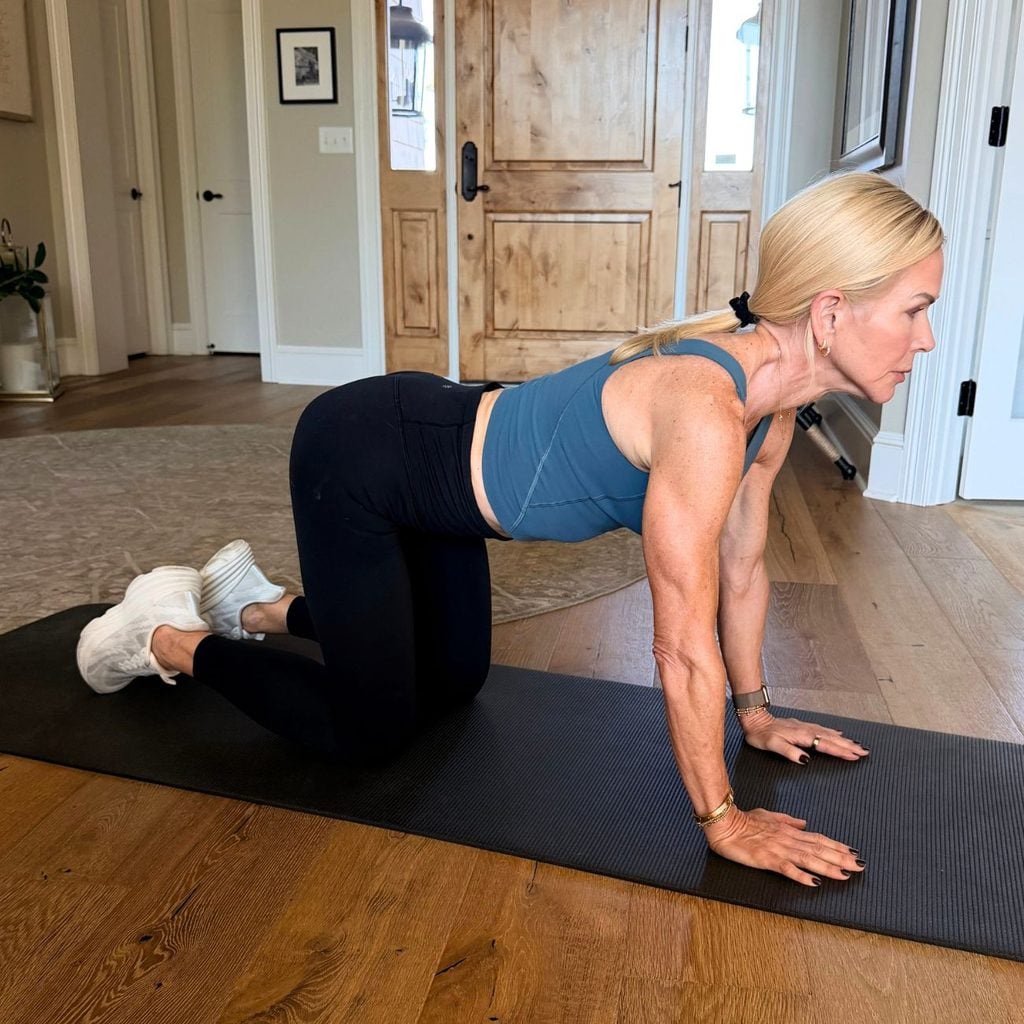
Come to your hands and knees with your wrists under your shoulders and knees under your hips. Inhale as you drop your belly and lift your chest and tailbone (cow). Exhale as you round your spine toward the ceiling and tuck your chin (cat).
Move slowly with your breath for 8 to 10 rounds.
When to Check With Your Doctor
Stretching is wonderful for everyday stiffness, but it isn’t a fix for everything.
Check in with your doctor or a physical therapist if:
- Your back pain lasts more than a few weeks
- Travels down your leg
- Comes with numbness, tingling, or weakness
- Started after a fall
- Shows up with fever or changes in bladder or bowel control
My Favorite Tools for Back Relief
Stretching does the heavy lifting, but a few tools can help your muscles recover between sessions. Here’s what I recommend.
Massage Ball
A massage ball gets into the spots a foam roller can’t reach. I lie on the floor, place it under my butt or my back wherever it feels like there’s a knot, and slowly sink my weight into it. Never put it directly on your spine. Stick to the muscles on either side.

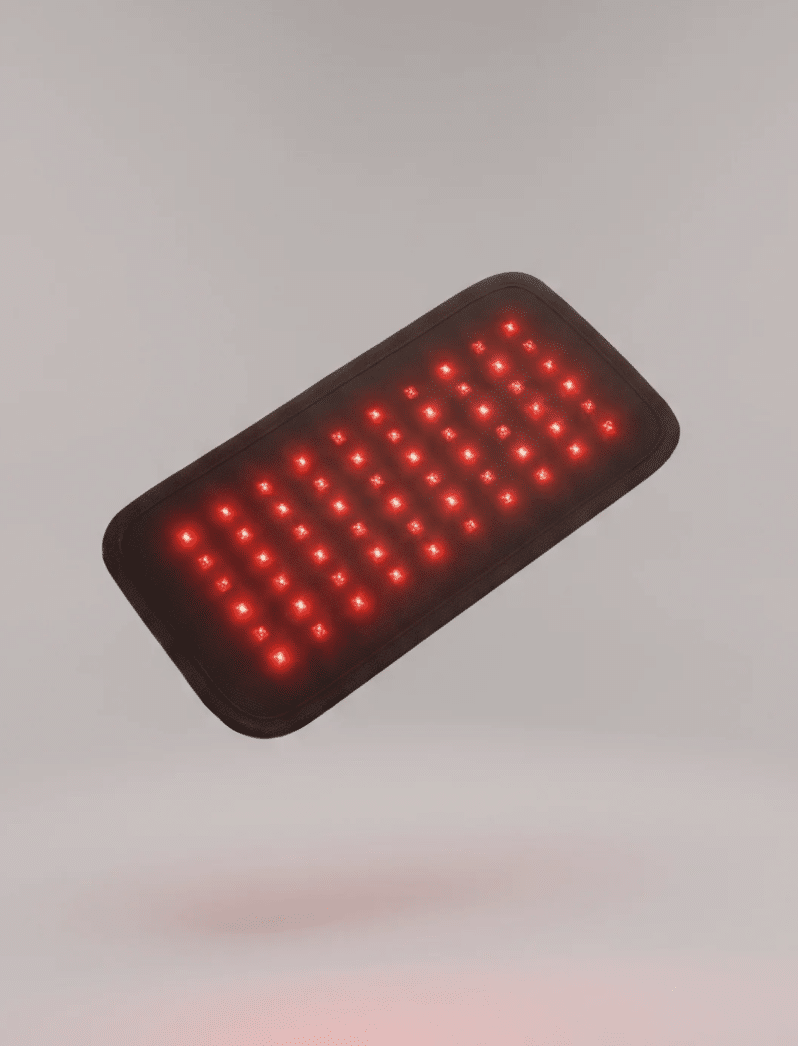
Infrared Light Pad
I wear my infrared light pad for 20 minutes every morning, mostly as prevention. See my exact infrared routine that I use to manage back pain in midlife!
Foam Roller
Rolling your hips, glutes, and upper back can ease the tightness that pulls on your lower back. I try to foam roll once a week for about 10 minutes. Avoid rolling directly on your lower spine, and check out these foam rolling tips to see exactly how to do it.

TENS Unit
A TENS unit sends mild electrical pulses through pads on your skin to help ease pain. I haven’t needed mine in a long time, but when my back pain was at its worst, it was really helpful and felt like it got the blood flowing in my back again.
Talk to your doctor first if you have a pacemaker, a heart condition, epilepsy, or are pregnant.

Theragun
I use my Theragun literally every day. It’s self-massage whenever I want it, and it’s great for working out knots in your glutes and hamstrings. Keep it on muscle and off your spine and bones.

Easy Morning Habits That Help Your Back
Stretching does most of the work, but a few small habits around it can make your mornings even easier.
Roll out of bed, don’t sit straight up. Bend your knees, roll onto your side, and push yourself up with your arms as your legs swing down. Your lower back doesn’t have to do a crunch before it’s even warmed up.
Drink a glass of water. You’ve gone all night without a sip, and starting the day hydrated is an easy win. I keep a glass on my nightstand so I don’t even have to think about it.
Take a short walk. Five minutes around the kitchen, down the driveway, or on a walking pad gets your hips and spine moving. Walking is one of the most joint-friendly things you can do for your back.
Break up your sitting. If you sit at a desk, stand up every 30 to 60 minutes. Set a phone reminder if you need one (I won’t judge).
Start where you are, even if that’s one stretch in bed tomorrow morning. Let me know in the comments how these feel and which ones your back loves most!
Morning Back Stretch FAQs
Yes! This routine is gentle enough for every day. Just listen to your body and back off on days when something feels off.
A lot of women feel looser that same morning. The bigger payoff comes from doing it consistently, so try to make it part of your routine, like brushing your teeth.
Sure. Knees to chest and child’s pose are lovely ways to wind down before bed.
For everyday stiffness, many people find warmth (a warm shower or heating pad) helps tight muscles relax. Ice is more often used for a fresh injury or swelling. If you’re not sure which fits your situation, ask your doctor or physical therapist.
Make the movement smaller or skip that one. You should feel a stretch, never sharp pain. If pain travels down your leg or sticks around, check out the “When to Check With Your Doctor” section above.