
This post contains affiliate links. Please see our disclosure policy.
Let’s get real for a minute. As we navigate midlife, there’s a silent shift happening in our bodies that many women aren’t prepared for, muscle loss. Yep, that slow fading of strength, that frustrating feeling when your favorite jeans don’t quite zip the same way, or that moment you realize your energy just isn’t what it used to be. You’re not imagining it, this is real, and it has a name: sarcopenia.
And here’s the thing, hormones play a big role in all of this. As we move through perimenopause and menopause, estrogen levels begin to decline, and that drop directly affects our muscle mass and metabolism. Estrogen is more than just a reproductive hormone. It actually helps preserve lean muscle tissue and supports how our body uses and stores energy. When it dips, so does our ability to hang onto that muscle if we’re not actively doing something about it.
But here’s the part I want you to hear loud and clear: muscle loss during menopause may be common, but it is NOT inevitable. You’re not powerless, and you don’t need to settle for feeling weaker. I’m here to tell you that you can take charge of your strength and vitality.
I’m in my 60’s and actively training for my “Grandma Chapter.” Yes, I want to be that strong grandma who can pick up grandkids, carry groceries, and chase after life with energy. Strength training is how I’m doing it and you can too.
8 Simple Exercises for Menopause Muscle Maintenance
Ready to get started? Here are 8 of my go-to exercises that will help you maintain (and even build!) muscle as you navigate menopause and beyond. These are full-body movers that will target multiple muscle groups, making your workouts efficient and effective.
You can do these exercises individually, or turn them into a circuit following my instructions below!
Circuit Workout Instructions:
- Reps: Perform 10-12 repetitions of each exercise.
- Circuits: Repeat the full circuit 2-3 times.
- Weight Selection: Choose weights that truly challenge you by the last 2 repetitions. This is where the magic happens for muscle growth!
- Movement Quality: Focus on slow, controlled movements. Quality over quantity, always!
Alright, let’s get started!
PS: The video GIF’s below are sped up for demonstration purposes and file size. Do not lift your dumbbells fast. Use good form and go slow.
These moves pull double duty: every rep also signals your bones to get stronger. Here’s how to build bone density with strength training and jumping, including why the lowering phase matters so much.
1. Squat
There is nothing like a basic squat to tone the butt and legs. It’s functional, it’s effective and it’s what I call the “hero” of all lower body exercises.
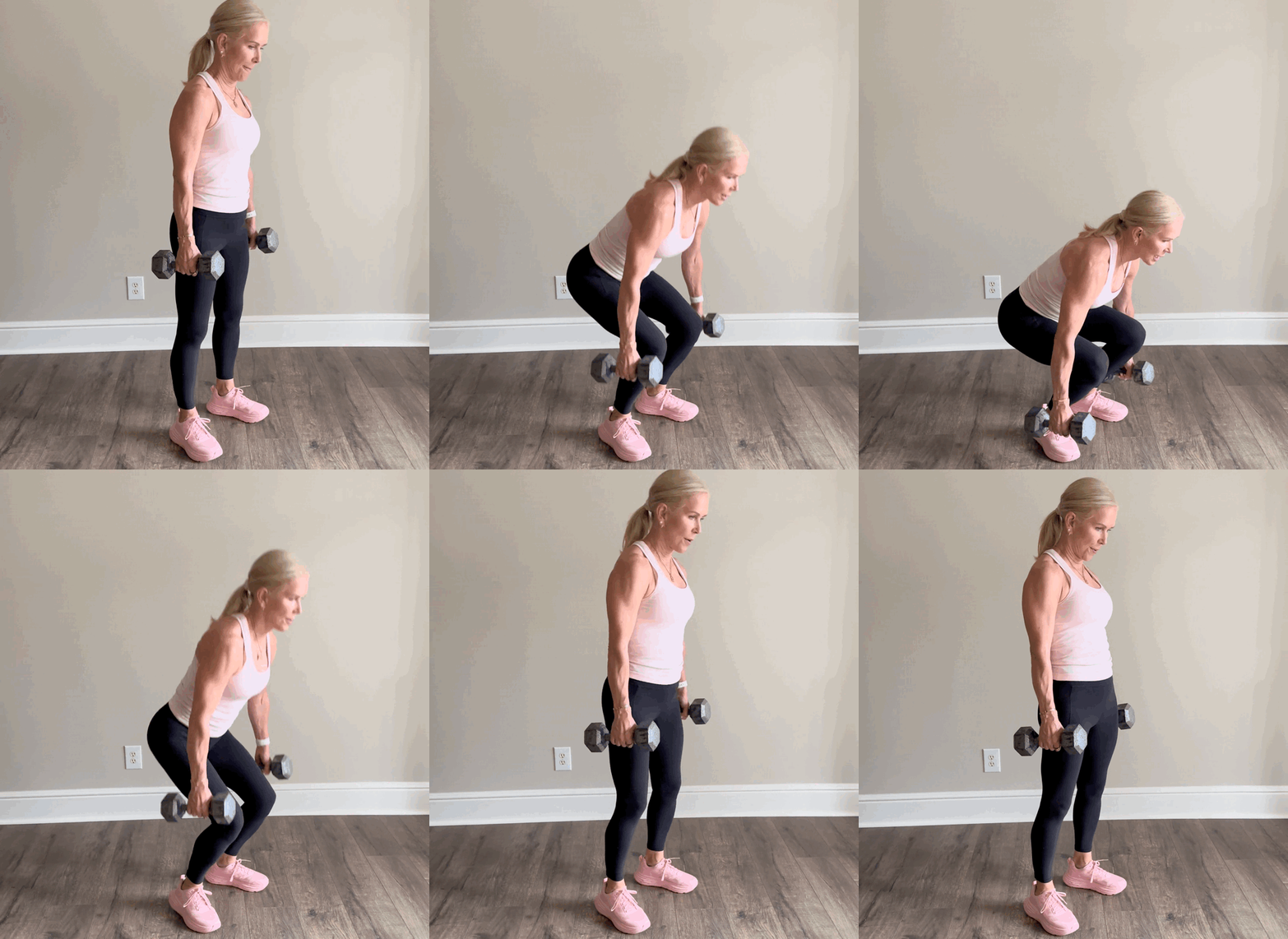
How to do a squat:
Squat: Stand with feet shoulder-width apart, toes slightly out. Lower your hips as if sitting in a chair, keeping your chest up and core engaged. Go as low as comfortable, then push through your heels to stand back up.
2. Reverse Lunges
Excellent for single-leg strength and stability, improving balance and targeting your legs and glutes.
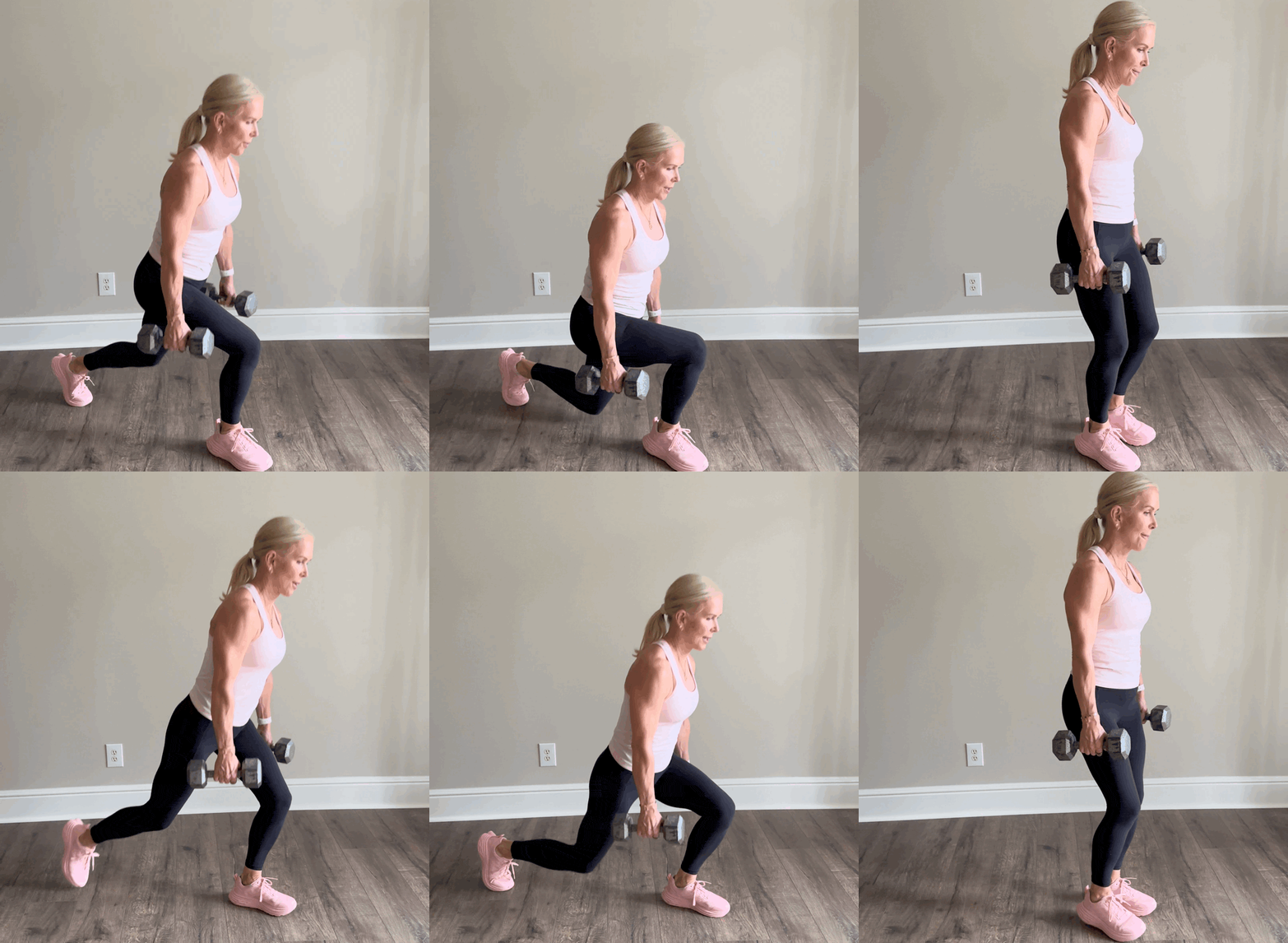
How to do reverse lunges:
Stand tall, hands on hips or holding weights. Step one foot straight back, lowering your hips until both knees are bent at about a 90-degree angle. Keep your front knee over your ankle and your back knee hovering just above the ground. Push off your back foot to return to the starting position. Alternate legs.
3. Deadlift + 2 Rows + 2 Bicep Curls
A fantastic compound movement that hits your back, biceps, and posterior chain, talk about efficiency!
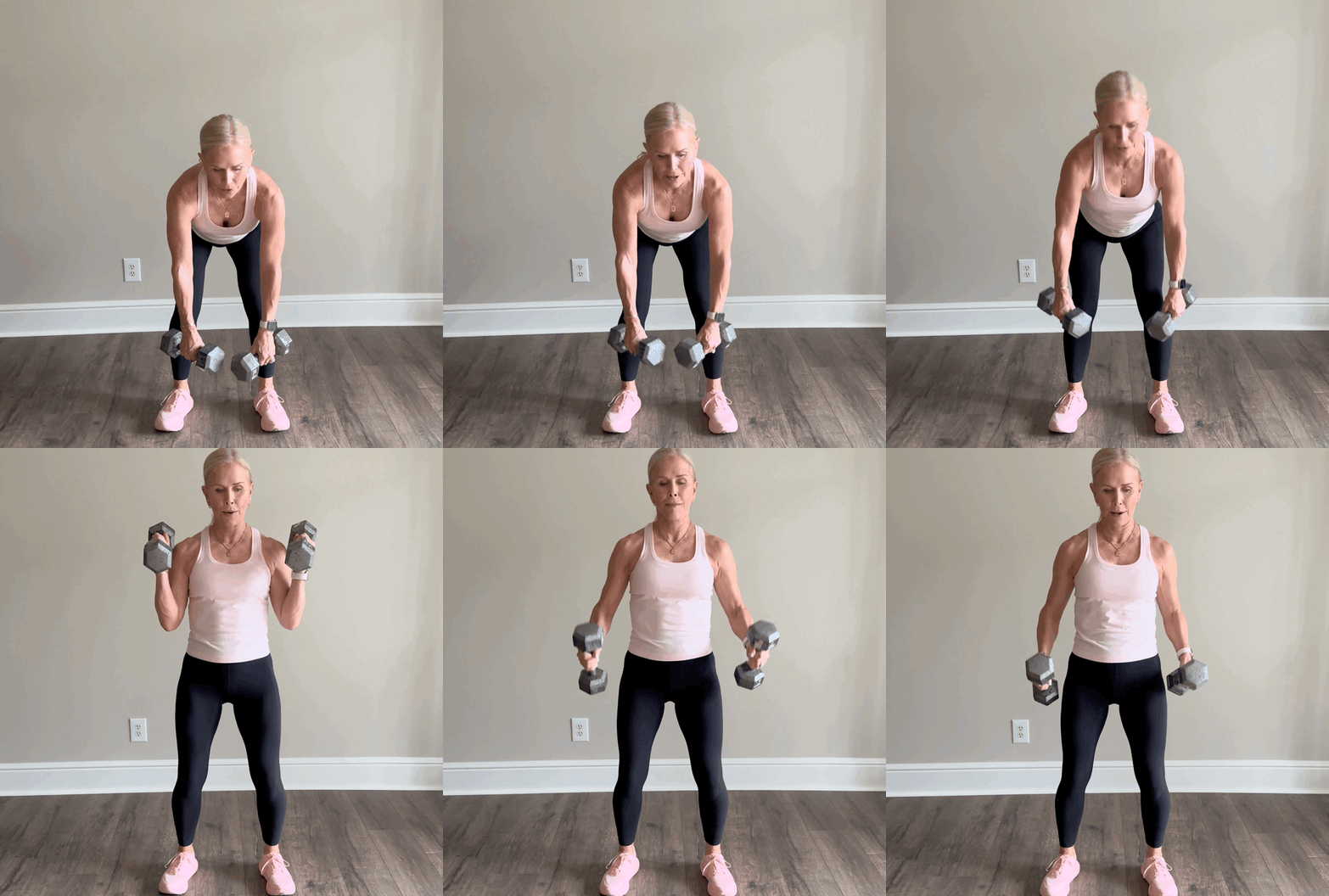
How to perform a deadlift with rows and bicep curls:
Perform a deadlift. At the top of the deadlift, with a weight in each hand, hinge slightly at your hips again, keeping your back flat.
Deadlift: Stand with feet hip-width apart, and your dumbbells in front of you. Hinge at your hips, keeping a long, extended spine and a slight bend in your knees. While in your deadlift you will preform the rows. Make sure your abs are engaged. Then, stand back up using your hamstrings and glutes (not your low back) to do the bicep curls.
Rows: Pull the weights towards your chest, squeezing your shoulder blades together. Lower with control for two repetitions.
Bicep Curls: Stand tall, arms extended down, palms facing forward. Curl the weights up towards your shoulders, keeping elbows tucked. Lower with control for two repetitions. This completes one full rep of the combination.
PS. You might also love these 5 exercises to tone your arms over 50!
4. Overhead Presses
Builds strong shoulders and upper body strength, essential for everyday tasks and good posture. My favorite acronym: LHS. “Lift Heavy Stuff” over your head to stay strong!
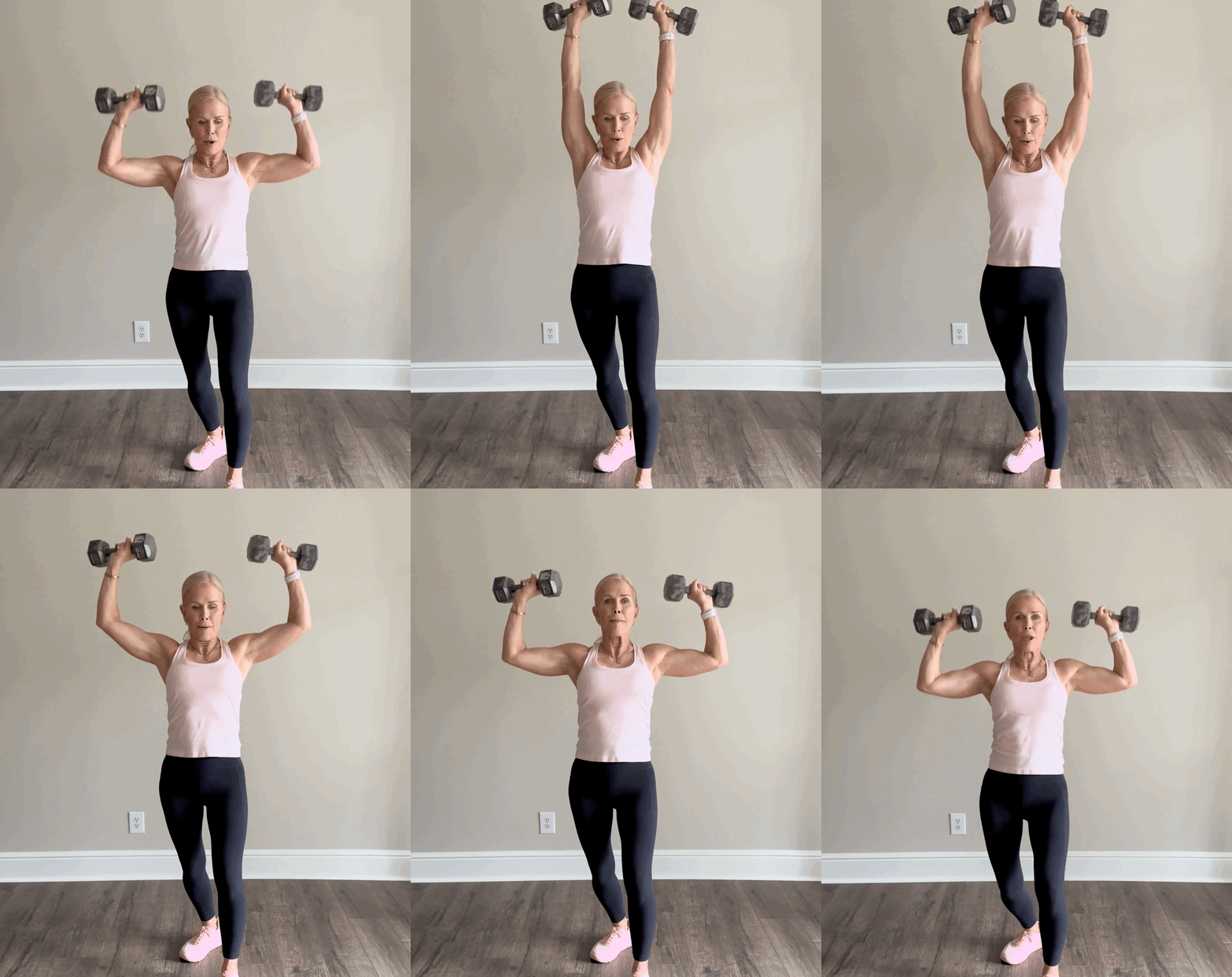
How to perform overhead presses:
Stand with feet shoulder-width apart, holding a dumbbell in each hand at shoulder height, palms facing forward. Engage your core.
Press the weights straight overhead until your arms are fully extended (but not locked). Control the movement as you lower the weights back to your shoulders.
5. Skull Crushers
Targets your triceps, helping to banish those “bat wings” and strengthen the back of your arms.
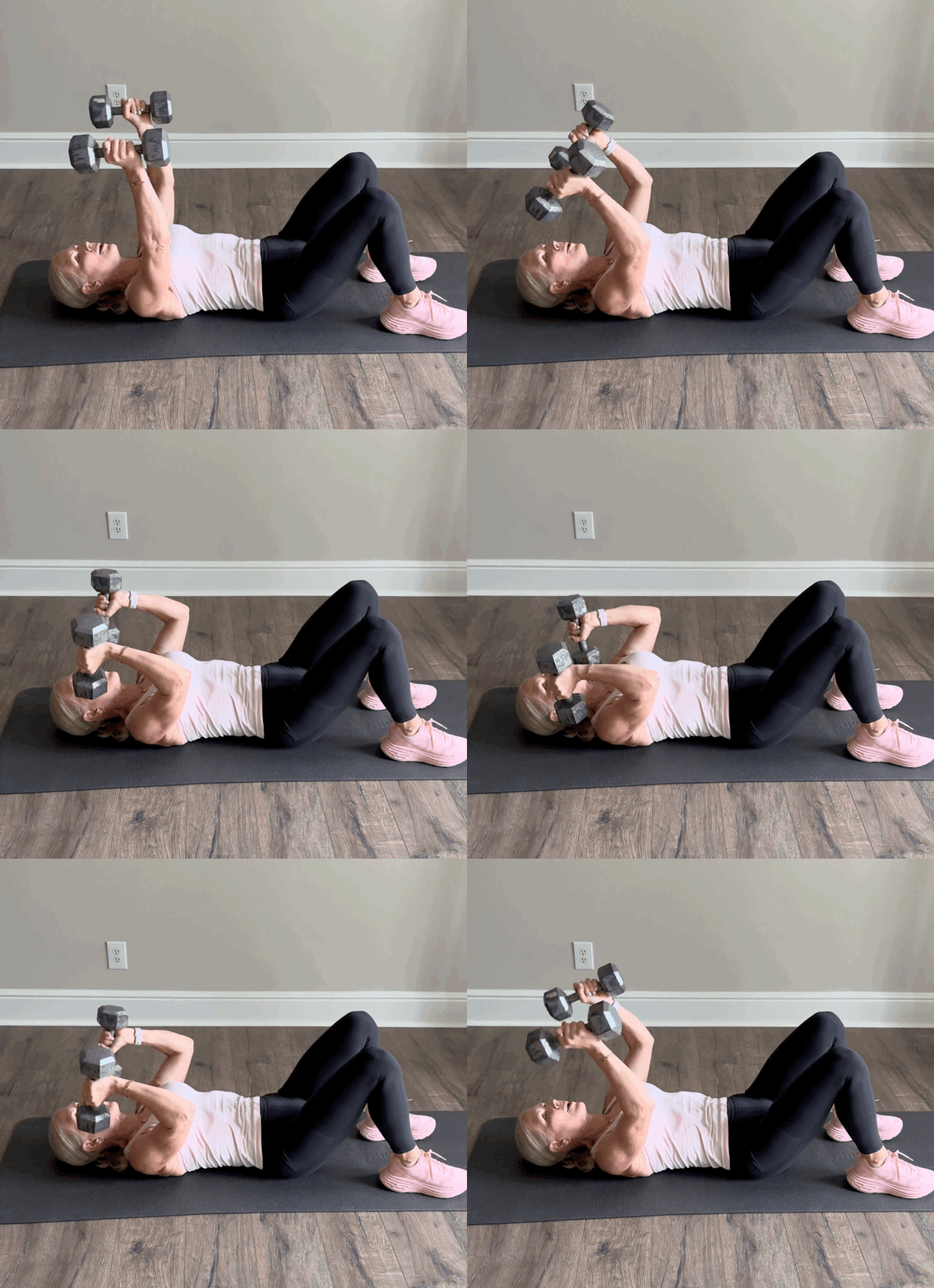
How to perform skull crushers:
Lie on your back on a bench or the floor, holding a dumbbell in each hand directly above your chest, palms facing each other. Extend your arms.
Keeping your upper arms stationary, bend your elbows to lower the weights towards your forehead (hence “skull crushers,” but obviously be careful!). Extend your arms to press the weights back up.
For even more arm focus, check out my favorite tricep exercises to tone your arms in middle age!
6. Push-Up + Reach
A challenging exercise that works your chest, shoulders, triceps, and core, with an added stability component.
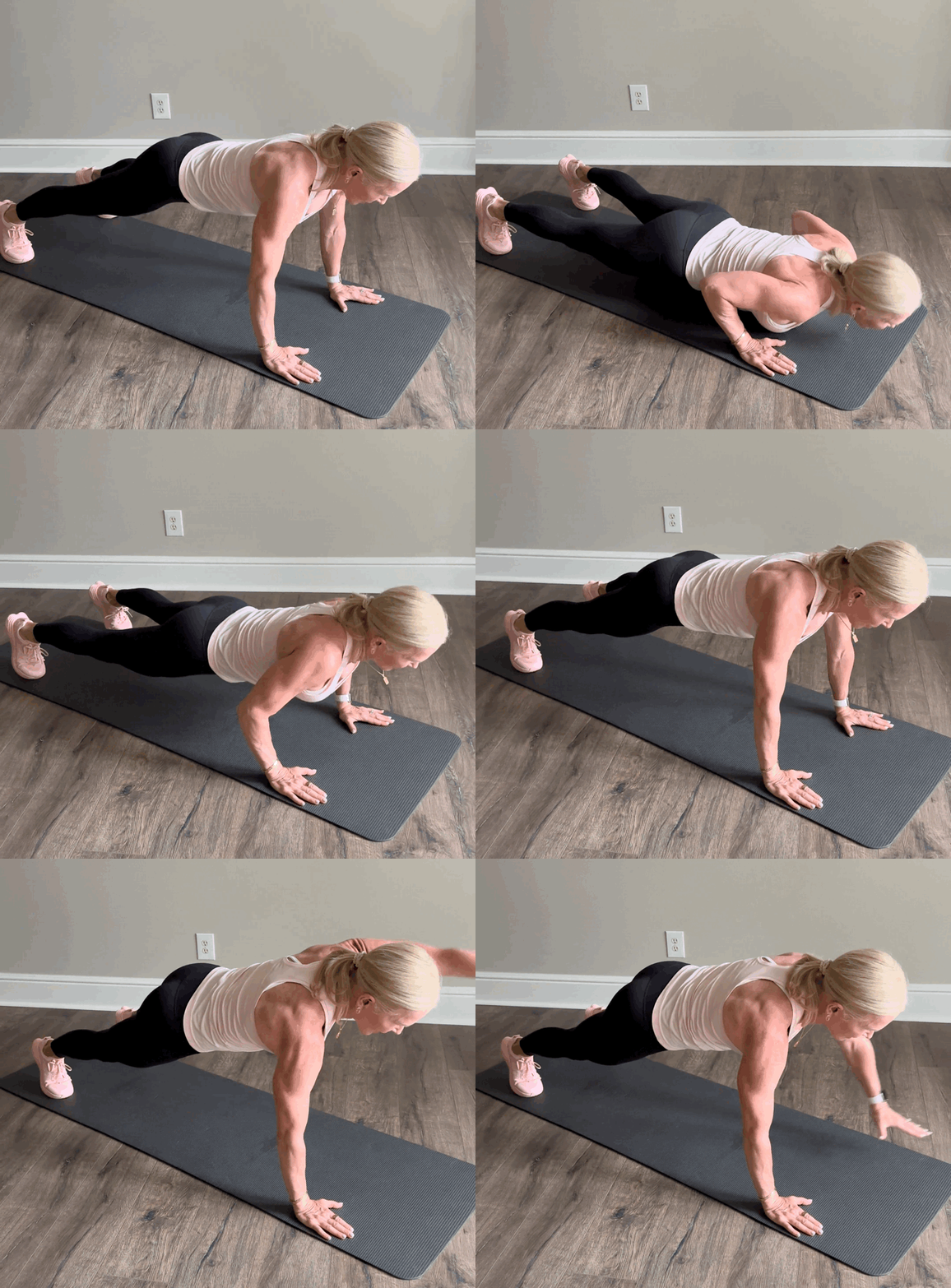
How to perform a push up and reach:
Start in a plank position (on hands and toes, or on hands and knees for a modification), hands slightly wider than shoulder-width apart.
Perform a push-up, lowering your chest towards the ground. Push back up to the plank position.
Once back in plank, lift one hand and reach it forward, maintaining a stable core and trying not to rock your hips. Return the hand to the floor and repeat on the other side. That’s one full repetition. Modify on your knees if you are a beginner.
7. Full Body Roll Up
A phenomenal core exercise that also stretches your spine and engages your entire body.
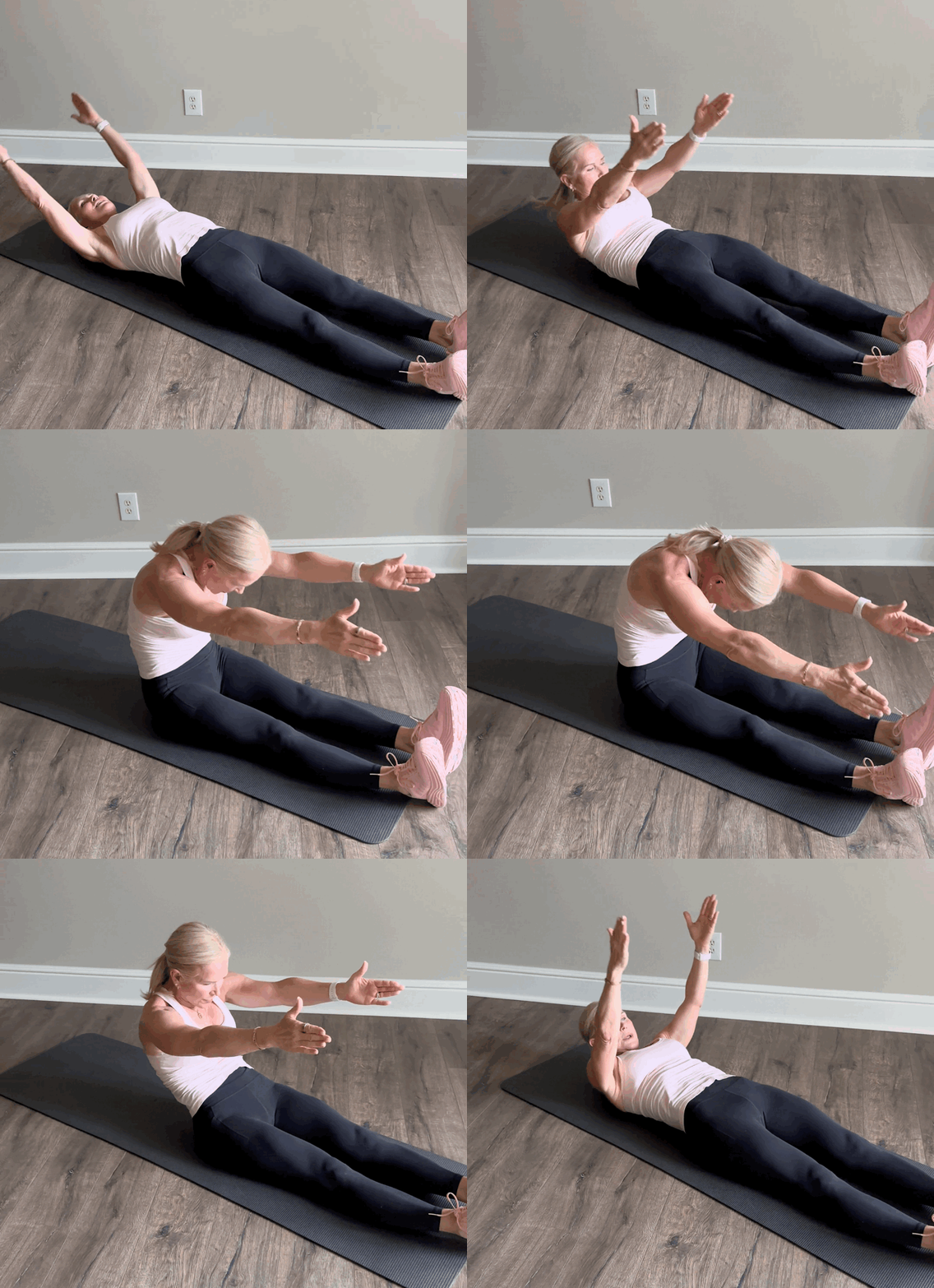
How to perform a full body roll up:
Lie on your back, arms extended overhead, legs straight.
Slowly begin to roll your body up, starting with your head, then shoulders, reaching your arms forward as you articulate your spine off the floor. Try to reach for your toes.
Reverse the movement, slowly rolling back down one vertebra at a time until you’re flat on your back again.
8. Side Plank Hip Dips
Incredible for strengthening your obliques and building core stability, crucial for protecting your back.
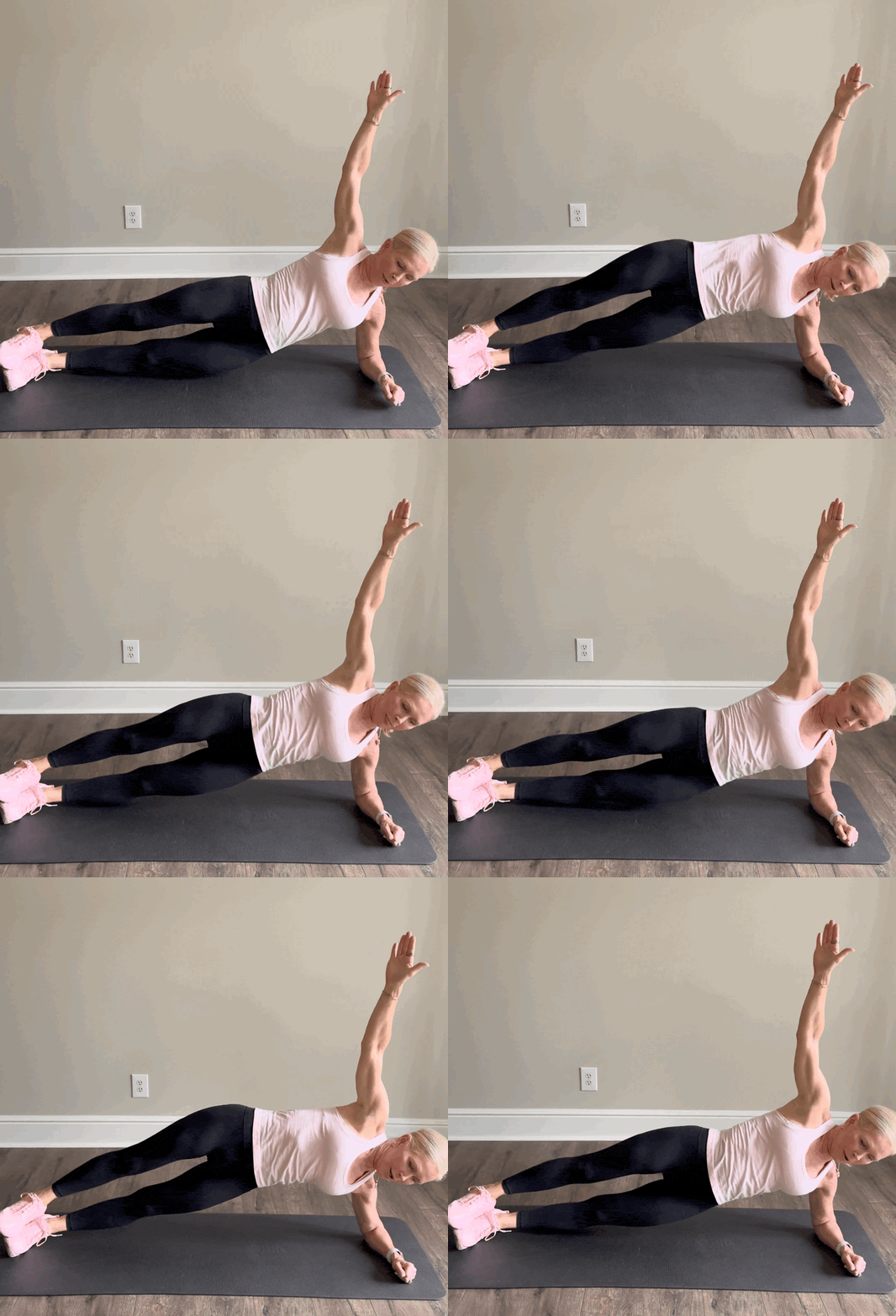
How to perform side plank hip dips:
Start in a side plank position: forearm on the ground, elbow under your shoulder, body in a straight line, feet stacked or one foot in front of the other for more stability.
Keeping your core tight, slowly lower your hips towards the floor a few inches, then lift them back up towards the ceiling, squeezing your side body. Repeat on both sides.

Why Muscle Matters More Than Ever During Menopause
So, maybe you’re thinking, “Okay, Chris. I’ve lost a little muscle. So what?”
Trust me, it’s more than just how your arms or legs look, it’s about how you live your life.
Here’s why building muscle is non-negotiable in your 40s, 50s, and beyond:
Metabolism and Weight Management
The more muscle you have, the higher your resting metabolism. This means your body burns more calories even when you’re just sitting on the couch. As muscle mass declines during menopause, our metabolism naturally slows down, which can make weight management more challenging.
Keeping our muscles strong helps to counteract this metabolic slowdown. Check out these six ways strength training slows the aging process!
Strength and Functional Movement
Whether it’s lifting laundry, getting off the floor, or pushing a heavy door open, daily life demands strength. Strength training keeps your muscles working so you can stay independent and feel capable. This is what functional fitness is all about!
Learn more about how functional fitness keeps you strong for everyday life!
Balance and Bone Health
Loss of estrogen during menopause doesn’t just affect muscles, it affects bone density, too. Strength training can actually help build bone and improve balance, reducing your risk of falls and injuries.
Incorporating jump training for women over 50 is a critical strategy for improving balance and preventing muscle mass decline.
Let me say it again for the people in the back: strong muscles mean strong bones. And if you’re concerned about osteoporosis, resistance training is your best friend.
I recommend these 10 osteoporosis exercises to strengthen your bones at any age.
Your Antidote: Strength Training (and Lifting HEAVY!)
Here’s the truth, walking and yoga are great, but they’re not enough to replace muscle. The most effective antidote to muscle loss? Strength training. And yes, that includes lifting heavy!
If you’re not sure what weight to lift, check out my guide for when you should increase your weights.
I always tell my clients: you’ve got to challenge your muscles to change them. If your last couple of reps don’t feel like work, it’s time to grab a heavier set of dumbbells. You’re not going to bulk up, I promise. What you will do is sculpt lean muscle, boost your energy, and fire up your metabolism.
And, YES it is possible to build muscle after menopause! In fact, many women are stronger now than they were in their 30s, simply because they’re finally prioritizing themselves.
One last thing. I’d be remiss if I didn’t mention this. If you’re just beginning your strength training journey, I want you to hear this: go slow, listen to your body, and be patient with the process.
Your joints and muscles need time to adapt, especially if you’ve been inactive or aren’t used to lifting weights. Start with lighter weights, focus on form, and gradually build up over time.
Progress might feel slow at first, but every extra rep, every added pound, every moment you feel stronger? That’s a win. Celebrate those gains, they matter more than you know.
Embrace Your Strongest Self, At Every Age
Remember, this journey is about so much more than just the number on the scale or the size of your clothes. It’s about feeling strong, capable, and confident in the incredible body you have. It’s about taking proactive steps to ensure you can live your fullest, most energetic life, no matter what chapter you’re in.
Let’s embrace this “Grandma Chapter” (or whatever chapter you’re in!). You are stronger than you think, and with consistent effort, you can absolutely maintain your muscle and thrive through menopause and beyond!
How Often Should You Strength Train During Menopause?
Here’s the question I hear all the time: “Chris, how many days a week do I actually need to lift?”
Two to three days a week, on non-consecutive days. That’s it! Your muscles get stronger while you rest, not while you’re lifting, so the days in between matter just as much as the workout. (Recovery isn’t lazy. It’s productive.)
Here’s what a simple week can look like:
- Monday: Strength circuit (the 8 moves above)
- Tuesday: Brisk walk, 30 minutes
- Wednesday: Strength circuit
- Thursday: Mobility or yoga, 20 to 30 minutes
- Friday: Strength circuit
- Saturday: Something fun that gets you moving, like a long walk with a friend, pickleball, or a bike ride
- Sunday: Rest
If three strength days feels like a lot right now, start with two. Monday and Thursday works beautifully. Start where you are and build from there.
You’ll notice walking and mobility are on this plan too, and that’s on purpose. Cardio is to live longer, strength training is to live stronger, and mobility training is to live pain-free. You want all three in your week. A brisk walk is also one of the easiest ways to work toward the recommended 150 minutes of moderate cardio per week.
As for me? I still teach live group fitness classes every week, I lift two to three days a week, and I’m on my walking pad at 1 mph while I work. None of it is fancy, but I do it week in and week out, and that’s what gets results.
How to Progress Over 4 to 8 Weeks
“Lift heavy” is great advice, but nobody should walk in on day one and grab the heaviest dumbbells on the rack (please don’t!). You get there step by step. Here’s the simple plan I give women who are just starting this circuit:
- Weeks 1 and 2, learn the moves: Do 2 rounds of 10 reps each. Pick a weight that feels manageable and put all your focus on form. Slow and controlled, remember?
- Weeks 3 and 4, add reps: Keep the same weight and work up to 12 reps of each exercise.
- Weeks 5 and 6, add a round: Stay at 12 reps and add a third circuit. You’ll feel this one!
- Weeks 7 and 8, go heavier: Bump your weights up 2 to 5 pounds and drop back to 10 reps. Then build back up to 12.
That’s the whole secret: reps first, then rounds, then weight, then repeat. Trainers call it progressive overload. I call it the reason so many women in their 50s and 60s are stronger now than they were at 35.
How do you know you’re ready to move up? Watch for these signs:
- The last 2 reps of every set feel easy.
- You could do 2 or 3 more reps with good form.
- You get through the whole circuit without needing much rest.
- Everyday stuff, like carrying groceries or hauling the laundry basket upstairs, feels noticeably easier.
Read this twice: if your last couple of reps don’t feel like work, your muscles have no reason to change. For more on this, check out my guide on when you should increase your weights.
And if a week goes sideways (hello, life), don’t start over. Just pick up where you left off.
Protein and Muscle After 40: The Piece Most Women Are Missing
You can do every rep of this circuit perfectly and still struggle to hang onto muscle if you’re not eating enough protein. I see it all the time. Women tell me they’re lifting consistently and eating “healthy,” and they can’t figure out why nothing is changing. Nine times out of ten, they’re getting about half the protein they need.
As we age, our bodies get less efficient at turning protein into muscle (researchers call this anabolic resistance), and falling estrogen doesn’t help. That means midlife women actually need MORE protein than we did in our 20s.
How much protein do you need?
Research on older adults generally points to about 1.2 to 1.6 grams of protein per kilogram of body weight per day. That works out to roughly 0.5 to 0.7 grams per pound. For a 150-pound woman, that’s about 80 to 110 grams a day. If that number surprises you, you’re not alone!
Use my simple protein calculator to see exactly how much you need based on your weight and activity level.

Spread it out.
This is where so many of us go wrong. It’s coffee and a bite of toast for breakfast, a salad at lunch, then a big piece of chicken at dinner. Your muscles do better with steady doses, so aim for 25 to 30 grams at each meal. Breakfast is the easiest place to make up ground.
Here are some easy protein foods I keep on hand:
- Greek yogurt (about 15 to 20 grams per serving)
- Cottage cheese (about 25 grams per cup)
- Eggs (about 6 grams each)
- Chicken, turkey, fish, or lean beef (about 25 grams in a 3-ounce portion)
- Lentils or edamame (about 18 grams per cooked cup)
- String cheese (about 7 grams each)
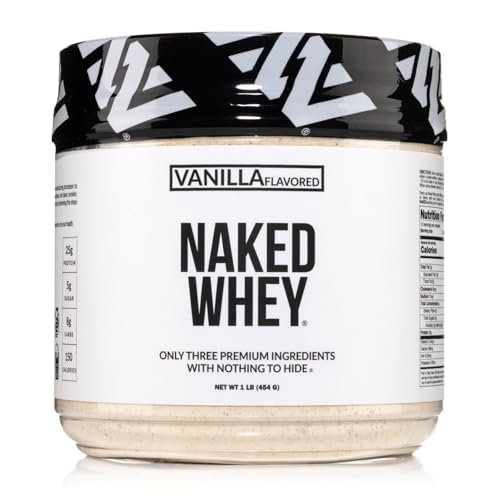
- Protein powder in a smoothie or shake (usually 20 to 30 grams per scoop)
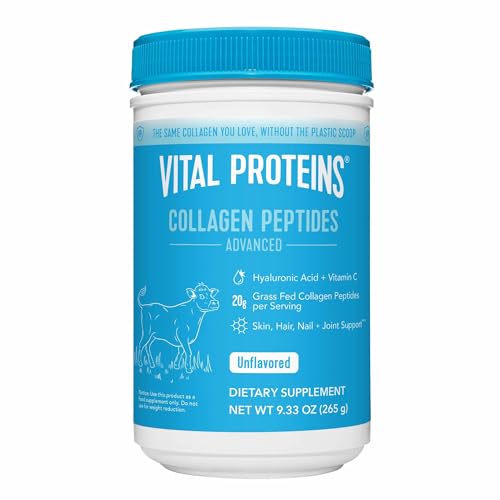
PS. I add a scoop of collagen to my AG1 every morning, and I love it for my skin and joints. But I don’t count collagen as my main protein, because it’s low in leucine, the amino acid your muscles need most to grow.
I don’t eat like a bird. I eat like a woman who understands that food is fuel. Moral of the story? Lifting tells your muscles to grow, and protein gives them what they need to do it. You need both.
-
 Check Price
We earn a commission if you make a purchase, at no additional cost to you.
10/11/2026 09:40 pm GMT -
Check Price
We earn a commission if you make a purchase, at no additional cost to you.
10/11/2026 09:40 pm GMT
Preventing Muscle Loss FAQs
Yes, absolutely! Your body can build muscle at any age. After menopause you just have to be more intentional about it, which means lifting weights that challenge you and eating enough protein. I’ve watched women in their 60s and 70s get stronger than they’ve ever been. Here’s more on how to build muscle after menopause.
Choose a weight that makes the last 2 reps of each set hard to finish with good form. For most women, that means heavier than the pink 3-pound dumbbells we all started with. If you could easily do 3 or 4 more reps, it’s time to go up. My guide on when to increase your weights walks you through it.
No, I promise! Women don’t have the testosterone levels to bulk up by accident, especially after menopause. What you’ll get is lean, strong muscle, more energy, and clothes that fit better. This is one of those women’s fitness myths I’m begging you to ignore.
Walking is wonderful for your heart, your mood, and your joints, and I walk almost every day. But walking alone won’t give your muscles enough of a challenge to hold on to muscle through menopause. You need strength training too. Cardio is to live longer, strength training is to live stronger, and mobility training is to live pain-free.
Most women feel stronger within 4 to 6 weeks of consistent strength training, and everyday tasks start to feel easier. Visible changes usually take 8 to 12 weeks. Try not to judge your progress by the scale. How your clothes fit and how much you can lift tell you a lot more.
In most cases, yes, and it’s one of the best things you can do for your bones. Check with your doctor first, and skip moves that round your spine under load. From this workout, that means the full body roll-up. These 10 osteoporosis exercises are a great place to start.
HRT can help. Estrogen plays a role in preserving muscle and bone, and HRT changed my life during my own hormone hell years. But HRT doesn’t replace lifting weights and eating enough protein. Talk to a menopause-informed provider about whether it’s right for you.
Not at all! All you need is a couple of sets of dumbbells and a mat. I like having a light pair and a heavier pair on hand so I can switch weights depending on the move.


This is such an empowering reminder that menopause doesn’t have to mean losing strength. I really appreciate how these exercises focus on functional movement, not just appearance. Strength truly becomes a long-term investment.